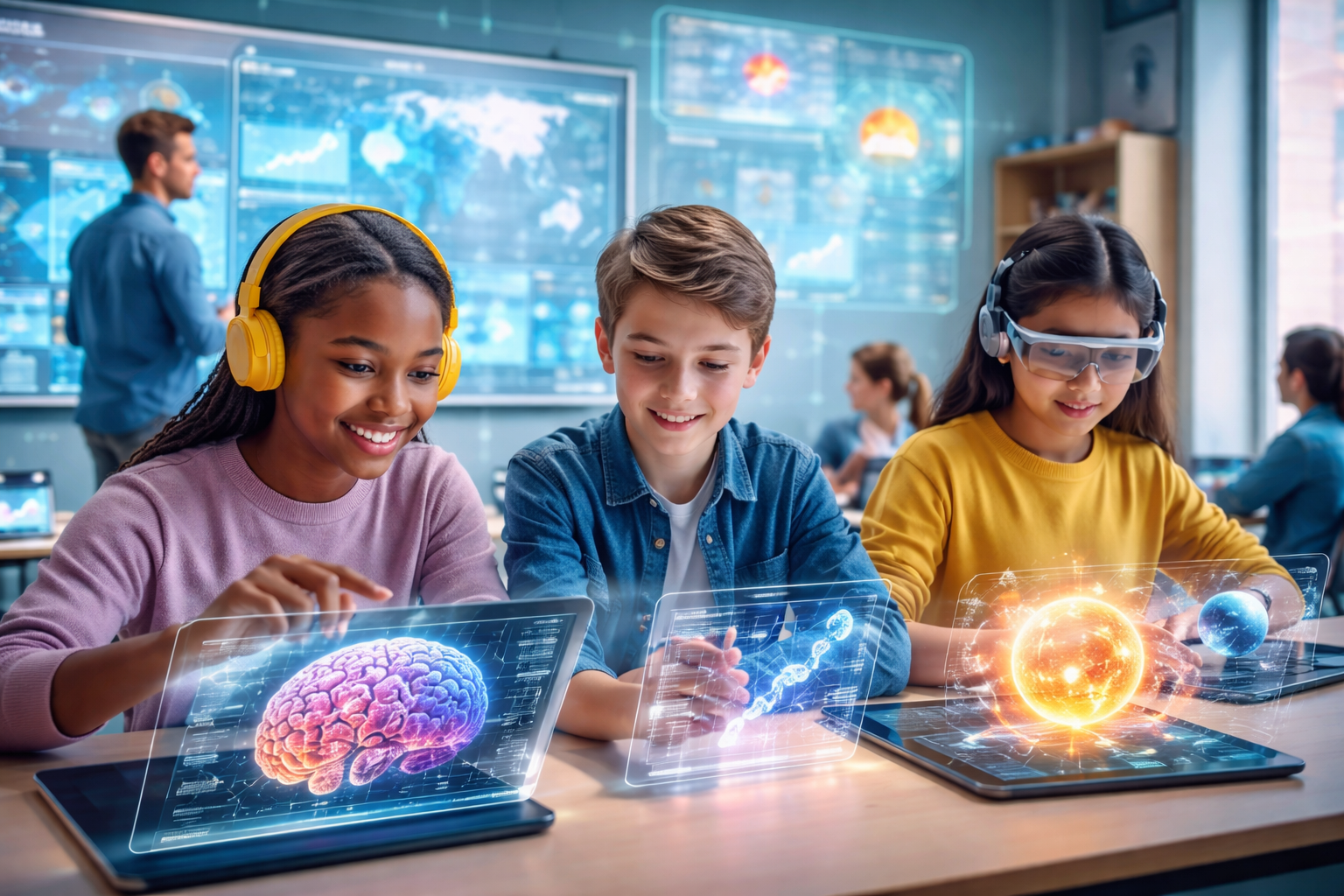
The Future of Education: How Technology Is Transforming Learning in 2026
Education is evolving faster than ever before, driven by rapid technological advancements and changing global needs. In 2026, classrooms no longer rely solely on textbooks, chalkboards, or traditional teaching methods. Instead, digital platforms, artificial intelligence, virtual reality, and personalized learning systems are reshaping how students learn, how teachers teach, and how knowledge is shared worldwide.
Technology is not just enhancing education — it is redefining it. From remote learning environments to intelligent tutoring systems, modern educational tools are creating more inclusive, flexible, and effective learning experiences. This article explores how technology is transforming education in 2026, the key innovations driving change, the benefits and challenges involved, and what the future holds for learners around the world.
The Rise of Digital Learning Platforms
Digital learning platforms have become the foundation of modern education. In 2026, most schools, universities, and training institutions use online learning management systems (LMS) to deliver course content, track student progress, and facilitate communication.
Platforms like virtual classrooms, cloud-based homework tools, and interactive educational apps allow students to learn anytime and anywhere. This flexibility benefits working students, remote learners, and individuals with special needs who may struggle with traditional classroom settings.
Additionally, digital platforms support multimedia learning. Instead of reading long textbooks, students can watch video lessons, participate in simulations, listen to podcasts, and engage in interactive quizzes. These tools make learning more engaging, improve knowledge retention, and cater to different learning styles.
Artificial Intelligence in Education
Artificial Intelligence (AI) plays a major role in transforming education in 2026. AI-powered tools help personalize learning experiences based on each student’s strengths, weaknesses, and pace.
Personalized Learning Paths
AI analyzes student performance and adapts lesson difficulty accordingly. If a student struggles with math concepts, the system provides extra practice and targeted explanations. If another student excels, the system offers advanced challenges to keep them motivated.
AI Tutors and Chatbots
AI tutors provide real-time support, answering questions and explaining complex topics outside classroom hours. These intelligent assistants help students learn independently and reduce the workload for teachers.
Automated Grading and Feedback
Teachers now use AI to grade assignments, quizzes, and exams more efficiently. This saves time and allows educators to focus on creative teaching, mentoring, and student engagement.
Virtual Reality and Augmented Reality in Classrooms
Virtual Reality (VR) and Augmented Reality (AR) are transforming learning into immersive experiences. Instead of reading about historical events or scientific concepts, students can explore them firsthand in virtual environments.
Experiential Learning
With VR, students can visit ancient civilizations, explore the solar system, walk through human anatomy, or conduct science experiments in virtual labs. This hands-on learning approach improves comprehension and makes lessons more memorable.
Real-World Skill Training
Medical students practice surgeries in VR simulations. Engineering students design and test virtual prototypes. Architecture students explore 3D building models. These experiences help learners develop practical skills without real-world risks.
Increased Engagement
VR and AR make learning more interactive and enjoyable, reducing boredom and improving student motivation.
The Expansion of Remote and Hybrid Learning
Remote learning, which gained momentum in previous years, has become a permanent part of education in 2026. Many institutions now offer hybrid learning models that combine online and in-person instruction.
Benefits of Hybrid Learning
- Students can attend classes from any location
- Reduced commuting costs and time
- Greater access to global educators and courses
- More flexible study schedules
Remote education also benefits students in rural or underserved areas by providing access to high-quality learning resources previously unavailable.
Gamification and Interactive Learning
Gamification is another powerful trend transforming education. Learning platforms now integrate game elements such as points, levels, rewards, challenges, and leaderboards to increase engagement.
Why Gamification Works
- Encourages motivation and participation
- Makes difficult subjects more enjoyable
- Promotes problem-solving and critical thinking
- Builds teamwork and collaboration skills
Educational games teach coding, math, language skills, science, and financial literacy in fun and interactive ways. This approach helps students stay focused while reinforcing important concepts.
Big Data and Learning Analytics
Big data plays a crucial role in improving educational outcomes. Schools and universities collect data on attendance, performance, engagement, and learning patterns to make informed decisions.
How Learning Analytics Helps
- Identifies students who need additional support
- Tracks academic progress over time
- Improves curriculum design
- Enhances teacher effectiveness
By analyzing learning data, educators can provide early intervention, optimize teaching methods, and improve student success rates.
Online Certifications and Skill-Based Learning
In 2026, education is shifting from traditional degree-focused systems toward skill-based learning. Online certifications, micro-credentials, and professional training programs are gaining popularity among students and employers.
Career-Oriented Education
Many learners now prioritize acquiring practical skills in technology, business, healthcare, digital marketing, and creative industries. Platforms offer short-term courses that teach real-world skills aligned with job market demands.
Lifelong Learning Culture
Technology enables people of all ages to continue learning throughout their lives. Professionals can upgrade skills, switch careers, or explore new interests through affordable online courses.
Collaborative Learning Through Technology
Modern educational tools encourage collaboration among students across different countries and cultures. Video conferencing, shared documents, cloud-based projects, and discussion forums allow learners to work together in real time.
Global Learning Communities
Students can collaborate on international projects, exchange ideas, and learn about global perspectives. This prepares them for future careers in a connected world.
Teamwork and Communication Skills
Technology-based collaboration helps students develop leadership, communication, and teamwork skills that are essential in modern workplaces.
Assistive Technology and Inclusive Education
Technology is improving accessibility for students with disabilities. Assistive tools help ensure that everyone can participate fully in the learning process.
Examples of Assistive Technology
- Screen readers for visually impaired learners
- Speech-to-text tools for students with writing difficulties
- Subtitles and captioning for hearing-impaired students
- Adaptive keyboards and learning software
These innovations promote inclusive education and create equal learning opportunities for diverse learners.
Challenges and Ethical Concerns
While technology brings many benefits, it also presents challenges that educators and policymakers must address.
Digital Divide
Not all students have access to high-speed internet, devices, or modern learning tools. Bridging this digital gap remains a priority to ensure fair education opportunities.
Data Privacy and Security
With increased use of digital platforms, protecting student data and privacy is critical. Schools must implement strong cybersecurity measures and ethical data policies.
Over-Reliance on Technology
Too much screen time and dependence on digital tools can affect attention spans, creativity, and social skills. Balancing technology with traditional teaching methods is essential.
Teacher Training
Educators need continuous training to effectively use new technologies and adapt to evolving teaching methods.
The Role of Teachers in the Future of Education
Despite technological advancements, teachers remain at the heart of education. In 2026, their role is shifting from information delivery to mentorship, guidance, and personalized support.
Teachers now:
- Facilitate discussions and critical thinking
- Support emotional and social development
- Guide students in digital literacy and responsible technology use
- Design engaging and meaningful learning experiences
Technology empowers teachers, but human connection, empathy, and inspiration remain irreplaceable.
What the Future Holds for Education Beyond 2026
The future of education will continue evolving as technology advances. Upcoming trends may include:
- Fully immersive metaverse classrooms
- Brain-computer learning interfaces
- More advanced AI tutors
- Personalized global education networks
- Increased emphasis on creativity, innovation, and problem-solving
Education will become more flexible, learner-centered, and globally connected than ever before.
Conclusion
In 2026, technology is transforming education into a more dynamic, inclusive, and effective system. Digital platforms, artificial intelligence, virtual reality, remote learning, and data-driven insights are reshaping how students learn and how educators teach.
While challenges such as access, privacy, and balance remain, the overall impact of technology on education is overwhelmingly positive. By embracing innovation while preserving the human element of teaching, the future of education promises greater opportunities for learners worldwide.
Technology is not replacing education — it is empowering it, expanding its reach, and redefining what it means to learn in the modern world.
Leave a Reply