
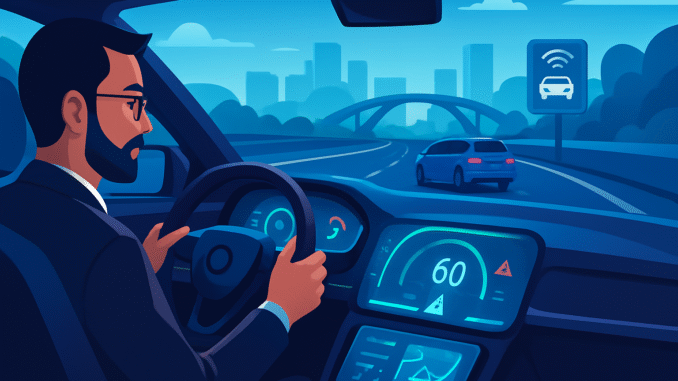
Top 10 Automotive Innovations Shaping the Future of Driving in 2025
The automotive industry is going through one of the biggest transformations in history. From electric vehicles and autonomous driving to smart safety systems and sustainable materials, innovation is reshaping how we move. In 2025, we are seeing breakthrough technologies become part of everyday driving, offering enhanced safety, efficiency, and comfort.
Here are the Top 10 Automotive Innovations that are shaping the future of driving this year.
1. Advanced Electric Vehicle (EV) Technology
Electric vehicles are no longer a futuristic concept—they’re mainstream. In 2025, EV technology has advanced significantly, with longer driving ranges, faster charging times, and improved battery efficiency.
New solid-state batteries are a major breakthrough. They offer higher energy density, allowing EVs to travel over 500 miles on a single charge, while reducing charging time to less than 15 minutes. Major automakers are also expanding their charging networks, making EV ownership more practical for everyone.
Additionally, EV prices continue to drop due to mass production and government incentives. This is pushing more drivers to switch from gas-powered cars to sustainable, electric alternatives.
2. Autonomous Driving Systems
Self-driving cars are no longer just a tech experiment. In 2025, Level 3 and Level 4 autonomous vehicles are becoming available in select cities. These vehicles can handle most driving tasks, such as navigating highways, managing stop-and-go traffic, and parking, without human intervention.
Advanced AI algorithms, LiDAR sensors, and real-time data processing make autonomous systems safer and more reliable. Ride-sharing companies are also adopting these technologies, offering autonomous taxis in urban areas.
While fully driverless cars are still being refined, partial autonomy is making everyday driving less stressful, especially on long commutes and congested roads.
3. Vehicle-to-Everything (V2X) Communication
One of the most exciting innovations in 2025 is Vehicle-to-Everything (V2X) technology. This system allows vehicles to communicate with each other and their surroundings—including traffic signals, road infrastructure, and even pedestrians’ smartphones.
For example, a V2X-equipped car can receive real-time warnings about road hazards ahead or adjust its speed to synchronize with traffic lights. This leads to fewer accidents, better traffic flow, and reduced congestion.
As cities become smarter, V2X communication plays a critical role in integrating cars into intelligent transportation networks.
4. Augmented Reality (AR) Dashboards
Forget traditional dashboards—AR windshields are taking over in 2025. These systems use augmented reality to display key driving information directly on the windshield, such as navigation arrows, hazard warnings, and speed limits.
Instead of looking down at a screen, drivers can keep their eyes on the road while accessing all the information they need. Some premium models even project real-time traffic and pedestrian overlays, enhancing situational awareness.
This innovation combines safety and convenience, creating a futuristic yet practical driving experience.
5. Sustainable and Recyclable Materials
As environmental awareness grows, the automotive industry is turning to eco-friendly materials. Cars in 2025 increasingly feature recycled plastics, bio-based fabrics, and lightweight composites that reduce their carbon footprint.
For example, some manufacturers are using plant-based leathers and carpets made from recycled fishing nets. Lightweight materials not only make cars more sustainable but also improve energy efficiency by reducing overall weight.
This push toward greener manufacturing aligns with global climate goals and helps brands appeal to environmentally conscious consumers.
6. Advanced Driver Assistance Systems (ADAS)
ADAS technologies are not new, but in 2025, they’ve become more intelligent and widely accessible. Features like adaptive cruise control, lane-keeping assist, blind spot monitoring, and automatic emergency braking are now standard on most new vehicles.
The latest ADAS can predict potential collisions using AI-powered sensors and cameras. For example, if a pedestrian is about to cross unexpectedly, the system can react faster than a human, significantly improving safety.
These innovations are paving the way for fully autonomous vehicles while making driving today more secure and comfortable.
7. Over-the-Air (OTA) Software Updates
Gone are the days when you had to visit a service center for every system upgrade. In 2025, over-the-air (OTA) updates allow car manufacturers to send software improvements, bug fixes, and even new features directly to vehicles.
This means your car can get smarter over time. For example, a navigation system can receive updated maps instantly, or a car’s performance mode can be enhanced without replacing any hardware.
OTA technology reduces maintenance costs, improves cybersecurity, and keeps vehicles up to date in a rapidly changing tech environment.
8. Ultra-Fast Charging Infrastructure
One of the biggest barriers to EV adoption has been charging time. But in 2025, ultra-fast chargers with power outputs of 350 kW and above are becoming more common. These chargers can replenish an EV battery to 80% in less than 10 minutes.
Charging stations are also becoming more widespread, appearing at highways, supermarkets, and parking lots. Some even integrate solar power, making them more sustainable.
This infrastructure development is essential for supporting the mass adoption of electric vehicles and making long road trips more convenient.
9. Personalized In-Car Experiences
Modern vehicles are becoming personalized digital spaces. In 2025, AI-driven systems remember drivers’ preferences—from seat positions and temperature settings to favorite playlists and navigation routes.
Voice assistants have also become smarter, capable of holding natural conversations and controlling almost every aspect of the car. Passengers can adjust the lighting, play music, or get travel recommendations using simple voice commands.
Some vehicles even use facial recognition to adjust settings automatically when you enter, creating a unique, tailored experience for each driver.
10. Hydrogen Fuel Cell Vehicles
While EVs dominate the headlines, hydrogen fuel cell technology is making quiet but important progress. Hydrogen vehicles emit only water vapor and offer quick refueling times, similar to gasoline cars.
In 2025, several automakers are launching new hydrogen-powered models, particularly for commercial fleets and long-distance transportation. With governments investing in hydrogen infrastructure, this technology is becoming a viable alternative to battery EVs, especially in regions where charging networks are limited.
Hydrogen fuel cells could play a crucial role in achieving a zero-emission future, complementing battery-electric solutions.
The Road Ahead
The automotive industry in 2025 is more innovative than ever. These top 10 automotive technologies are transforming how we drive, making transportation smarter, safer, and more sustainable.
As these innovations continue to evolve, drivers can expect an era where cars are not just machines, but intelligent companions that seamlessly integrate with our lives and the world around us.
From electric powertrains and autonomous systems to AR dashboards and eco-friendly materials, the future of driving is here—and it’s incredibly exciting.