
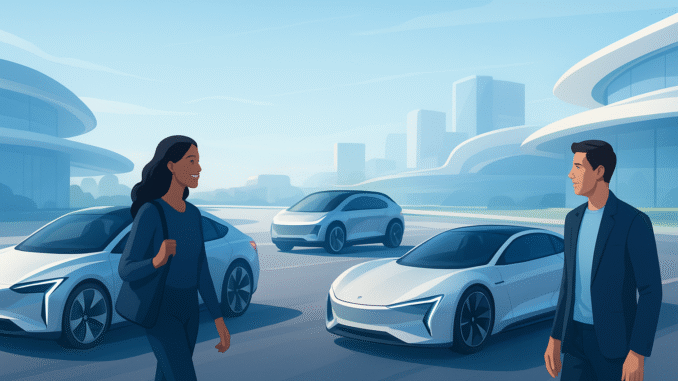
Driving Into the Future: Top Automotive Innovations Revolutionizing 2025
The automotive industry has always been a driving force of innovation. From the first combustion engine to the rise of electric vehicles, cars have evolved alongside human ingenuity. As we step into 2025, the pace of technological advancement in the automotive world has accelerated like never before. Automakers are blending cutting-edge science, sustainability, and digital intelligence to create vehicles that are smarter, safer, and more efficient.
In this article, we explore the top automotive innovations revolutionizing 2025—transformations that are reshaping how we drive, commute, and experience mobility.
1. Electric Vehicles (EVs) Take Center Stage
Electric vehicles have transitioned from being a niche choice to the mainstream standard in 2025. With major automakers such as Tesla, BYD, Hyundai, and Ford expanding their EV lineups, the global shift toward zero-emission mobility is unstoppable.
Battery technology has made significant leaps, with solid-state batteries now becoming commercially viable. These new batteries charge faster, last longer, and are safer than traditional lithium-ion versions. A 15-minute charge can now provide up to 500 km of range—something unimaginable just a few years ago.
Governments worldwide are supporting this shift by expanding charging infrastructure and offering incentives for EV buyers. In many urban centers, electric cars outnumber gasoline-powered ones. As a result, EVs are not only transforming transportation but also contributing to cleaner cities and a greener planet.
2. Autonomous Vehicles: The Rise of Self-Driving Cars
One of the most anticipated innovations of the decade is the autonomous vehicle (AV). By 2025, self-driving technology has advanced significantly, thanks to improvements in artificial intelligence, computer vision, and sensor technology.
Companies like Waymo, Tesla, and Mercedes-Benz are leading the race toward fully autonomous systems. Cars now use a combination of LIDAR sensors, radar, cameras, and real-time data analysis to navigate roads with remarkable accuracy.
In many cities, Level 4 autonomy—where vehicles can operate without human input in specific conditions—is now a reality. Self-driving taxis, delivery vans, and public shuttles are becoming part of everyday life.
The promise of autonomous driving extends beyond convenience. It can reduce traffic accidents caused by human error, optimize fuel efficiency, and even improve urban traffic flow. The road to full automation still faces regulatory and ethical challenges, but the progress in 2025 shows that the future of driving may soon be hands-free.
3. Connected Cars: The Internet of Vehicles
Cars in 2025 are no longer isolated machines—they are part of a vast digital ecosystem known as the Internet of Vehicles (IoV). These connected vehicles communicate not only with their drivers but also with other cars, traffic systems, and cloud-based networks.
Using 5G connectivity, cars can receive real-time updates on weather, traffic, and road hazards. For example, if a car ahead suddenly brakes, your vehicle gets notified instantly, allowing it to react faster than human reflexes.
In addition, connected vehicles support over-the-air (OTA) software updates, meaning owners no longer need to visit service centers for upgrades. Automakers can fix bugs, enhance features, and even improve performance remotely.
This interconnected system creates smarter, safer, and more efficient transportation networks—marking a major milestone in the evolution of mobility.
4. Artificial Intelligence (AI) and Machine Learning Integration
Artificial intelligence has become the brain of modern automobiles. AI powers everything from voice recognition systems to predictive maintenance and adaptive driving behavior.
AI learns from driver habits and adjusts the vehicle’s performance accordingly. For example, it can suggest the best route based on past patterns, adjust the cabin temperature automatically, or recommend charging stations on long trips.
In advanced driver-assistance systems (ADAS), AI helps detect pedestrians, identify blind spots, and prevent collisions. It continuously learns from millions of data points collected from other vehicles on the road, making the driving experience safer and smarter.
By 2025, AI isn’t just a luxury feature—it’s an essential component that personalizes every journey and ensures maximum safety.
5. Augmented Reality Dashboards and Smart Displays
Gone are the days of simple dashboards with speedometers and fuel gauges. In 2025, cars feature augmented reality (AR) dashboards that project real-time information directly onto the windshield.
This innovation enhances safety and convenience by displaying navigation directions, hazard alerts, and performance stats in the driver’s line of sight. Some models even highlight pedestrians or obstacles in low visibility conditions using AR overlays.
Paired with heads-up displays (HUDs) and voice-controlled systems, these digital dashboards reduce distractions and make driving more intuitive.
For passengers, smart displays transform the interior into an interactive environment—offering entertainment, real-time traffic updates, and control over cabin settings with a touch or gesture.
6. Sustainable Materials and Eco-Friendly Manufacturing
Sustainability is no longer a buzzword—it’s a requirement. Automakers are rethinking how cars are made, focusing on eco-friendly materials and green manufacturing processes.
In 2025, car interiors increasingly feature recycled plastics, plant-based leather, and bamboo fibers. Even car paint is evolving, using water-based and biodegradable compounds to minimize environmental harm.
Factories are also becoming carbon-neutral through renewable energy sources such as solar and wind power. Companies like Volvo and BMW have pledged to achieve fully sustainable production across their supply chains.
This shift toward eco-conscious design not only reduces the industry’s carbon footprint but also resonates with a new generation of environmentally aware consumers.
7. Advanced Safety Systems and Predictive Technology
Safety remains a top priority in 2025’s automotive innovations. Modern vehicles are equipped with predictive safety systems that go far beyond airbags and seatbelts.
Using AI and sensors, cars can now anticipate potential dangers before they occur. For instance, if the system detects a possible collision, it can automatically tighten seatbelts, adjust suspension, or apply emergency braking.
Other advancements include 360-degree cameras, lane-keeping assistance, and driver monitoring systems that detect fatigue or distraction. Some cars even feature health monitoring sensors that alert drivers to irregular heart rates or sudden fatigue.
These technologies work together to create a near accident-free driving environment—one where prevention takes precedence over reaction.
8. Vehicle-to-Everything (V2X) Communication
V2X communication technology allows vehicles to talk not just to each other (V2V) but also to infrastructure (V2I), pedestrians (V2P), and networks (V2N). This interconnected communication framework is transforming how traffic systems operate.
In 2025, smart traffic lights, connected highways, and city sensors all communicate seamlessly with vehicles to optimize traffic flow and reduce congestion. For example, a car approaching an intersection can adjust speed automatically based on the timing of nearby signals.
V2X also enhances safety by alerting drivers to potential hazards—like a pedestrian crossing hidden by another vehicle or a cyclist approaching from the blind spot.
As cities continue to adopt smart infrastructure, V2X will play a crucial role in building intelligent, efficient urban mobility systems.
9. Electric Charging Innovation and Solar Integration
One major breakthrough in 2025 is the evolution of electric charging systems. Ultra-fast chargers can now power up vehicles in minutes rather than hours. Wireless charging pads, embedded in parking lots or garages, allow EVs to charge automatically when parked.
Some automakers have also introduced solar-powered vehicles, equipped with integrated solar panels that extend driving range by capturing sunlight. These hybrid solar-electric systems make cars more energy-independent and environmentally friendly.
The combination of fast charging, renewable energy, and smarter battery management ensures that electric vehicles are more practical and accessible than ever before.
10. Personalized In-Car Experiences and Smart Cabins
The car interior of 2025 has transformed into a smart, connected living space. Vehicles are now equipped with AI assistants, biometric systems, and immersive entertainment setups that respond to the driver’s preferences.
Facial recognition starts the car and adjusts seat positions, lighting, and music automatically. Voice-controlled assistants handle navigation, communication, and even suggest relaxation modes for long drives.
Luxury automakers are integrating wellness features, such as air purification, ambient lighting, and massage seats, to enhance comfort. For electric vehicles, this personalized environment becomes even more important as drivers spend time charging or relaxing in autonomous mode.
The result? A car that feels less like a machine and more like a companion.
Conclusion: The Road Ahead
As we navigate through 2025, it’s clear that the automotive world is undergoing a remarkable transformation. The fusion of technology, sustainability, and innovation is redefining what it means to drive.
From autonomous systems and AI-driven safety to green materials and smart connectivity, these breakthroughs are creating vehicles that are not only more efficient but also more human-centered.
The cars of the future are not just about transportation—they are about experience, intelligence, and harmony with the environment. The road ahead promises a world where driving is cleaner, safer, and more connected than ever before.
The future of mobility has arrived—and it’s electrifying.